IBM on assignment at Toyota
Overview
Toyota Motor North America's internal Cube Platform needed an in-depth notification experience to keep supply chain employees informed on important events, status changes, and broadcast messages.
Various users ranging from platform users to notification administrators needed visibility on operations and real time updates to address communication bottlenecks across Cube.
My Role: Product Designer
My Team: 1 CPO, 1 Tech PO, 1 design director, 6 developers
I Owned: User flows, wireframes, interaction design, prototyping, and user interviews.
I Collaborated: Design system components, technical feasibility, and design reviews
Timeline: Nov 2025 – Present
(Prototype made with Figma Make!)
First I met with our CPO to learn about their expectations and requirements for notifications.
They requested 2 parts:
Ensure the Notifications Panel design from our design system team will fulfill all edge cases from the Vehicle Updates and Disruptions products going live in 3 months.
Create a Notification Preferences/Settings panel to customize what notifications users receive.
Design System Notifications Panel

I interviewed the product owners for the 2 products that would use Notifications first and identified their gaps.
Broadcast notifications were needed. Their product admins needed to be schedule and send out broadcast messages to certain users.
Users need the ability to specify what vehicles they are notified about, especially groups of vehicles they've already bookmarked.
I started mapping out user flows to validate all assumptions and questions with the product teams and also explored other notification/messaging patterns to find inspiration and any improvements needed.
User Flow to Access Notifications

Inspiration from outlook and figma


Notifications went through many rounds of iteration due to the complexity of the notifications users would receive. The biggest obstacle was the scale, each notification event averaging around 20,000+ vehicles that are constantly changing status.
Our users asked for the simplest design that gives users more control over notifications they receive.
Traditional notifications updates users every time a change occurs. We decided to make the notifications dynamic so users won't see a full history of changes but rather stay updated on currently impacted vehicles. This reduces the information they have to digest.
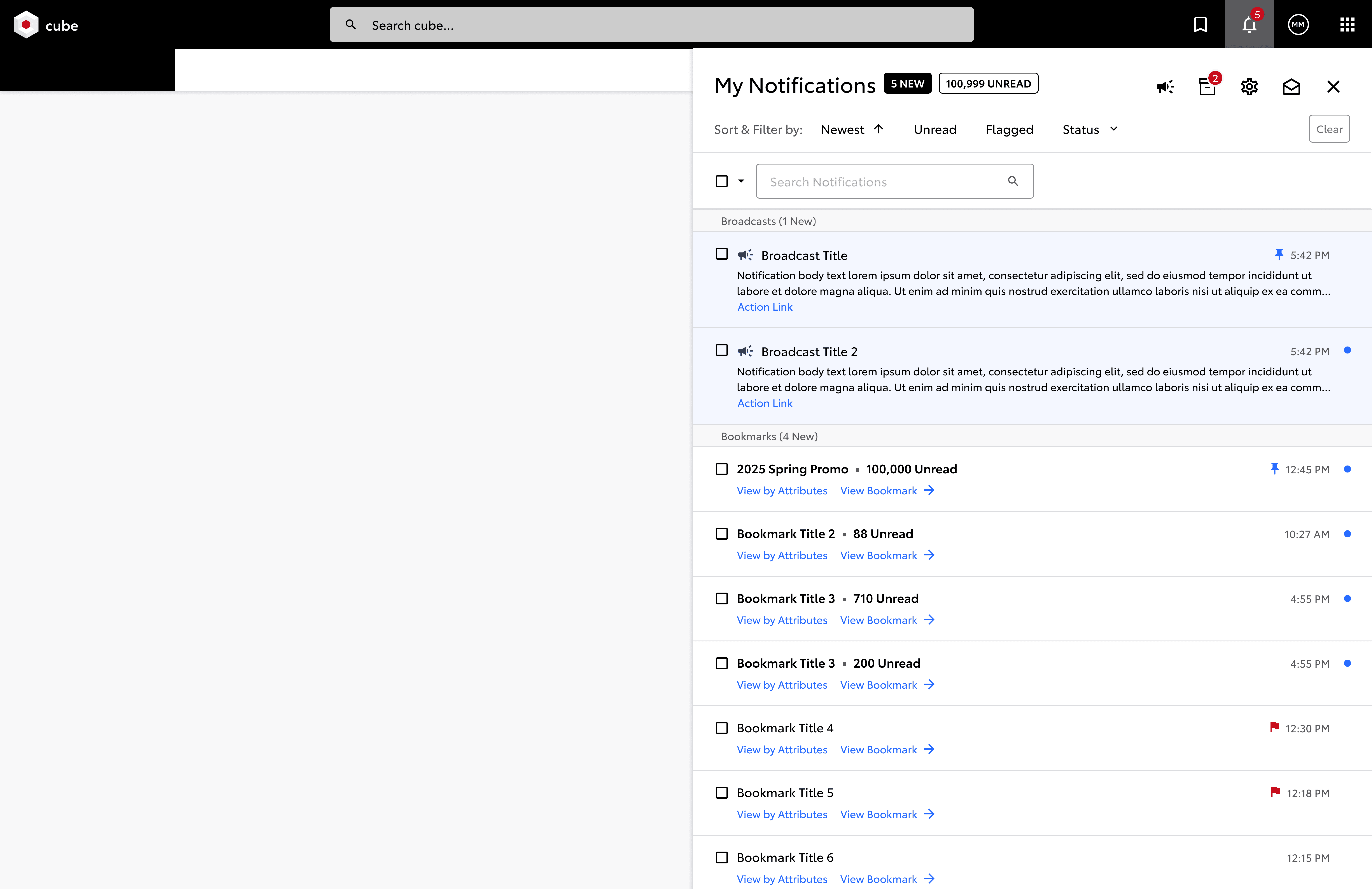

We also paired the notifications panel with a custom subscriptions design in Notification Settings rather than just a panel of opting into events. This allows them to add more details into what notifications they receive so they're not being spammed with notifications on large volumes of vehicles.
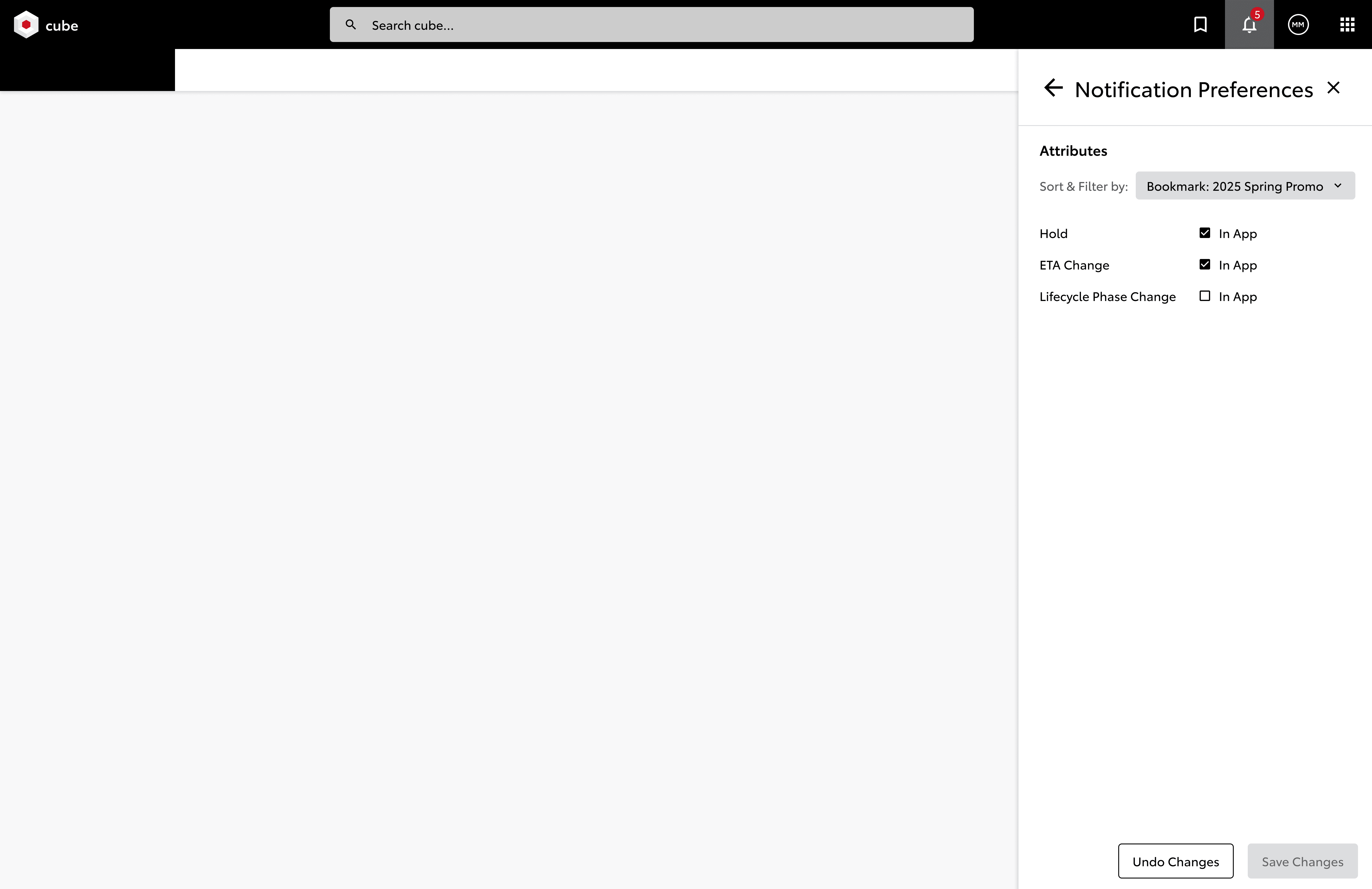

Custom Subscription in Notification Settings
Users to can manage their notifications and subscriptions in notification settings. There they can create custom subscriptions to personalize what notifications they receive. They can easily upload vehicles, choose individual vehicles or use bookmarked groups of vehicles to be notified on.
Creating a Broadcast Notification
Broadcasts enable notification admins to schedule and send targeted broadcast messages to specific users.
Notifications Panel (background blurred for CONFIDENTIALITY )
A global component all users in Cube will be able to access from anywhere in Cube. Notifications will be custom to each user according to what subscriptions they’ve set up.
Shipped an MVP design in 3 months to meet dependent product deadlines.
Ran hands-on design QA across development environments through every release cycle, cutting post-release visual bugs 20%.
Utilized Figma AI to iterate 10+ rounds of designs to showcase to business, ensuring all requirements are fully satisfied.
Leverage Cube's Design System to accelerate designing and align with established patterns.
I'm proud to have crafted an experience for employees to seamlessly view live updates on crucial data changes. Post MVP I am continuing to iterate on the Notifications experience as additional Cube products onboard while ensuring designs are aligned to AAA accessibility guidelines.
In our Notifications team, business and technical requirements often clashed, with business needs initially being agreed upon and only later as designs were being finalized were red flags brought up from the developers. Looking back what I would have done differently is spend more time aligning business and technical feasibility before designing to fully explore all technical restraints and reduce how many iterations we needed.

IBM, Design Director
Toyota Cube, Chief Product Owner